
Create an intricate 3D asset which requires high-end abilities, expensive software and hours of manual effort. Designers needed to meticulously sculpt the geometry, refine texture and refine models before they could be made. Artificial intelligence is revolutionizing the process. Modern technology makes it possible to create an 3D image from a photo file, making 3D design accessible to novices professional, business and amateur alike.
3D AI Studio demonstrate how advanced this technology has become, providing streamlined tools that enable creators to move from idea to finished model in just a fraction of the traditional time.
There is a rising demand for speedier 3D creation
Many industries are experiencing an increase in demand for 3D content that is of top quality. Gaming as well as product design architectural, film and e-commerce are all dependent on realistic visual assets to effectively communicate ideas and to attract audiences. As demand increases teams are seeking more efficient ways to develop models without sacrificing quality.
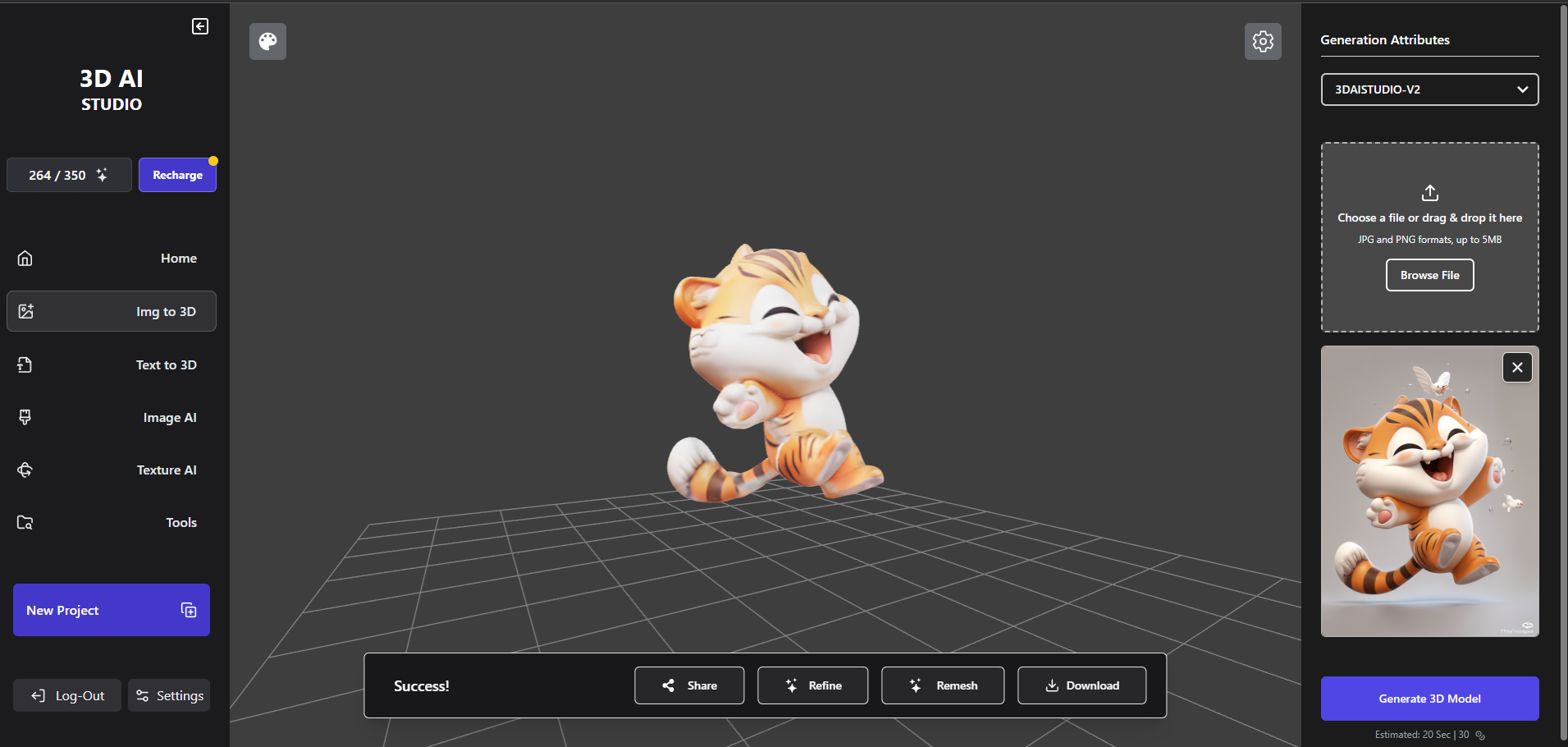
This is where image-to- 3D model tools for free and AI-powered workflows play a significant role. Instead of launching with complex modeling software, users are able to upload an image and let artificial intelligence look at forms, textures, and edges. The system then reconstructs the visual information into a useful 3D structure.
This lets teams experiment with greater freedom, and reduces the time spent creating assets.
How Photo-to-3D Technology Work
When the photo to 3D model process begins an artificial intelligence analyzes the image with great detail. It identifies patterns, predicts depth, and reconstructs the model in three dimensions. Advanced algorithms, based on massive datasets, make sure that generated models have realistic surface and proportions.
This technology is particularly beneficial to speed up prototyping. Designers can take photos of their sketch or physical item and turn it into a model to improve. Developers can build placeholder assets to test layouts and environments without having to invest in detailed modeling.
Platforms like 3D AI Studio often include options that automatize other steps like texturing or mesh optimization, which makes the final result appropriate for real-world applications.
Benefits to Business and Creators
One of the biggest advantages of picture to 3D model technology is accessibility. Traditional modeling typically requires years of experience, however AI-powered tools remove technological barriers and enable more people to participate in 3D design.
Another key benefit is efficiency. Automated texture and retopology generation can eliminate the need for repetitive tasks, which lets creators to focus on their creativity and design decisions rather than technical procedures. Faster production cycles result in quicker project delivery, and lower costs.
Marketers can develop visually appealing content more quickly, teachers are able to create interactive tools while designers can showcase prototypes earlier in the process.
Organized Workflows and Flexible Export Options
Modern AI-based platforms do more than just generate models; they also assist in managing them. Asset libraries let users store and organize projects in an organized way which makes it easier to find the files and to manage different versions.
Compatibility also matters. A 3D model generated from images is usually exported to a variety of formats, allowing smooth integration with game engines, rendering tools and 3D printing equipment. This flexibility ensures that generated assets can be used to suit a range of professional workflows.
Future-oriented 3D: AI-driven Design for the future
Artificial Intelligence is advancing quickly and the possibilities for 3D creation are growing. Future tools are expected to create more complex models, build entire environments and automate additional steps of the production chain.
Creators will have greater flexibility speed, control, and flexibility when platforms like 3D AI Studio continue their growth.
Conclusion
The ability to convert images into digital objects that are realistic is transforming the design process. Converting an image or photo into an 3D object has become simple swift, quick, and effective with the help of tools that facilitate image-to-3D model workflows.
As technology advances making a 3D layout from an image file will be an essential element of contemporary design. This will allow designers to create their designs more quickly and with less restrictions than previously.