
The advancements in banking technology have greatly automated bookkeeping. However, anyone who deals with financial records knows that automation doesn’t always work. In the case of feeds from banks, transactions might not be available as well as clients continue to send statements in PDF format. It is then necessary to change a PDF document that was meant for reading into something that accounting software actually uses.
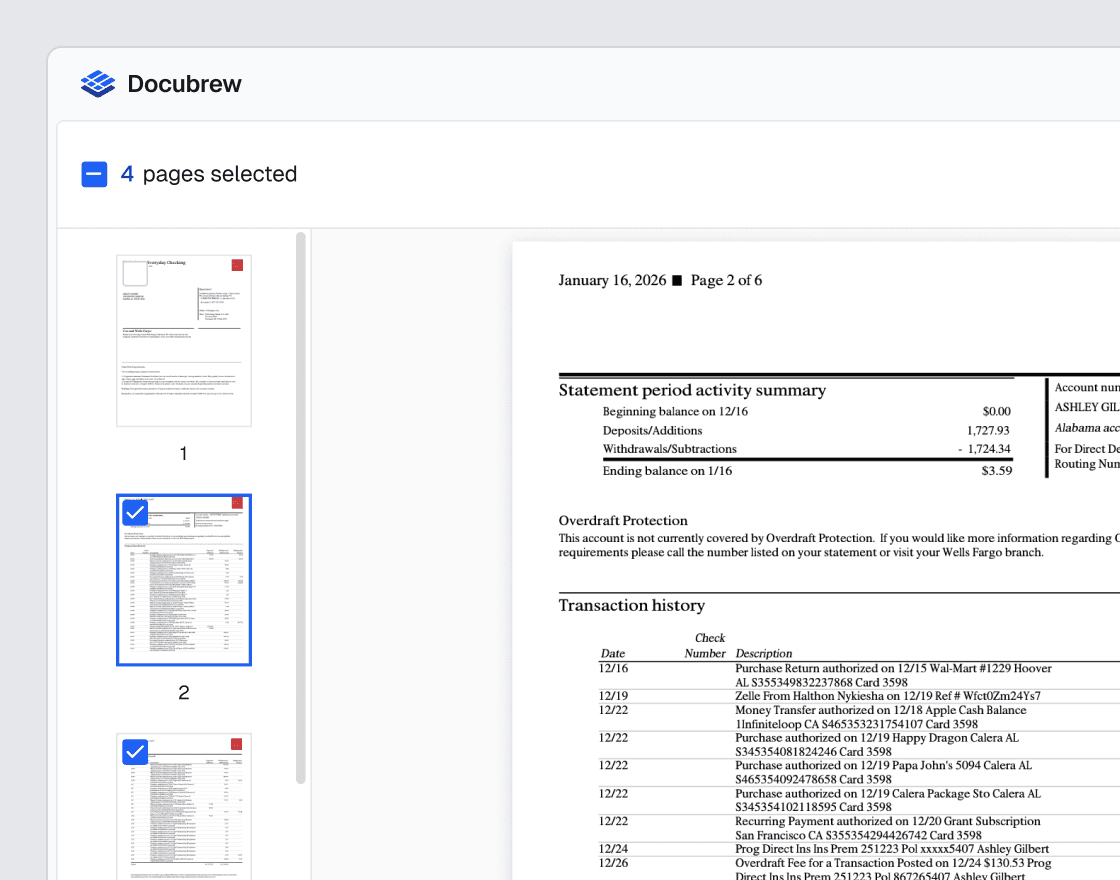
Image credit: docubrew.com
A converter for your bank statement can take away a significant portion of the repetitive tasks involved in the process. Docubrew instantly converts the data of your bank statement into structured spreadsheet data.
If a PDF ends up being the Missing Piece
Imagine a bookkeeper making the year-end reconciliation for an incoming customer. The accounting system has recently completed transactions, but some of the older months are not present. Fortunately clients have downloaded the original PDF statement.
It used to take hours of gruelling copying into a spread sheet. A PDF bank statement to Excel workflow offers a more practical alternative. Docubrew collects data about transactions from paper-based statements that are scanned, or digital PDFs.
Reduced manual transcription is a great way to reduce the risk of errors in typing for professionals who must transfer bank statements to Excel frequently.
Make sure you keep the pages that Actually are Counting
Bank statements don’t consist of only transactions. A 12-page report could contain an account overview, disclosures, notices and pages of the actual bank activity.
Docubrew allows users to view the document before deciding on the relevant pages before conversion. This makes it easier to convert bank statement data to Excel without the need to include unrelated content.
After processing, the document can be opened using Excel or made ready for use using accounting software such as QuickBooks, Xero, and FreshBooks.
CSV Offers a Flexible Accounting Workflow
CSV remains useful since it’s extensively supported by databases and spreadsheets. Accounting applications also work with CSV. If you need an account statement converted to CSV, Docubrew produces structured output based upon the transaction table that is in the statement.
The same workflow helps firms convert bank statements to CSV, whether they are making historical records from scratch, handling the cleanup of new clients, researching the missing transaction, or even preparing the data for reconciliation.
Accounting firms that need to process a variety of clients or statements simultaneously may benefit by batch processing.
Financial documents deserve thoughtful privacy controls
When processing financial records efficiency is not the only thing to think about. Bookkeepers and accountants may be also concerned about the location where they process financial records.
Docubrew has two alternatives. Windows desktop software runs files stored on the computer used by the user. These statements aren’t uploaded to be transformed. The cloud version with encryption is available to those who prefer to work in browsers. The uploaded files are deleted immediately after 24 hours.
That choice distinguishes the platform from bank statement to Excel software that depends exclusively on remote processing.
Turning Document Archives Back Into Working Data
While PDF statements are excellent documents, they’re not ideal to utilize when transactions have to be reconciled or sorted. They also can’t be imported, filtered, re-organized or re-organized. Scanned files can add a new problem, since the details of transactions are usually only accessible in images.
Docubrew offers statement parsing in conjunction with OCR support for scanned documents accounting professionals, bookkeepers, and businesses a practical route from archived financial paperwork to a usable set of transactional data.
This simple method can improve an inefficient workflow by preserving the bank statement that was originally issued while the transaction table is converted to information that you can utilize.